
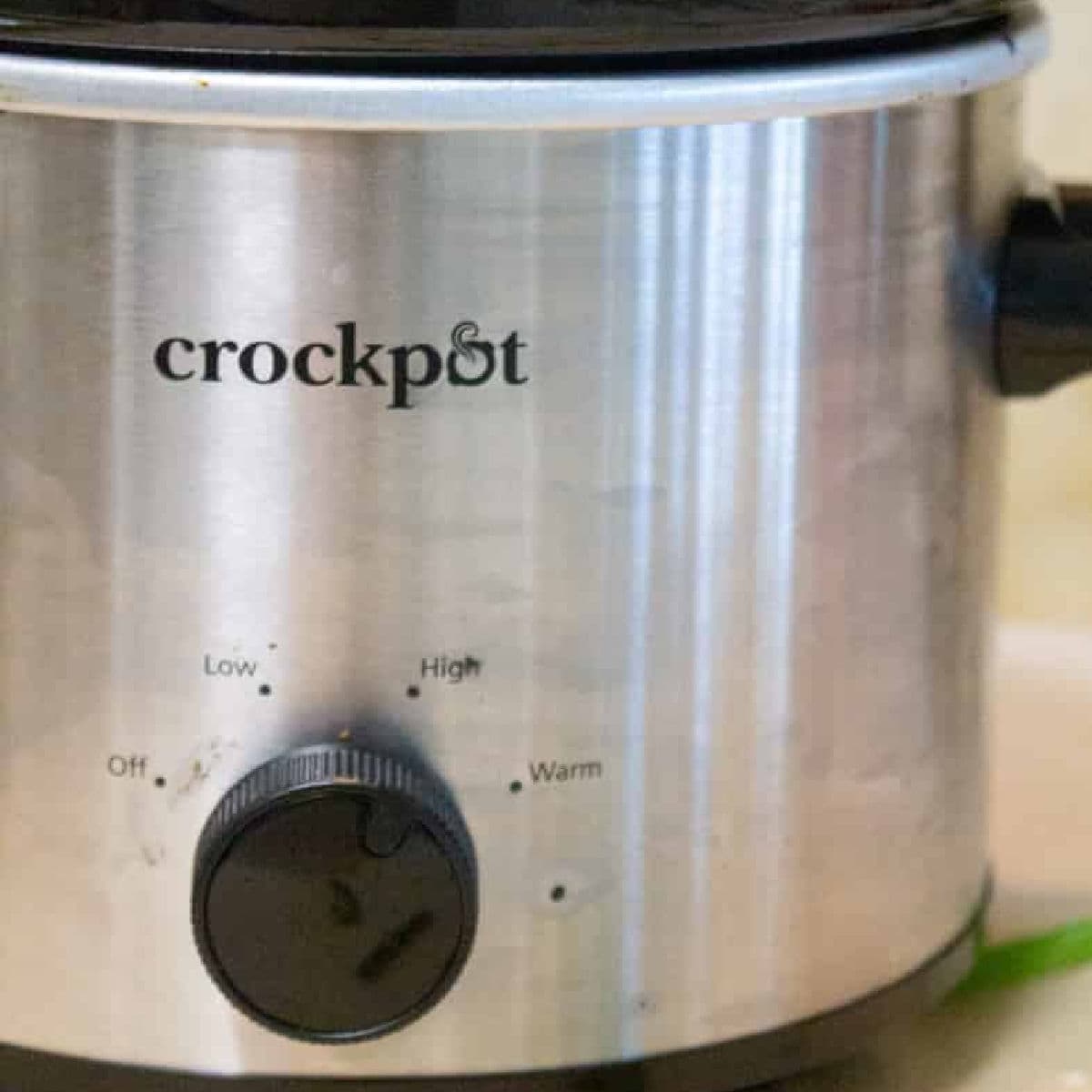
Converting a standard recipe for a smaller slow cooker is easier than it sounds once you know how to adjust the liquid, timing, and crock size. This guide shows you how to adapt soups, stews, braises, and other moist-heat recipes for a 1.5 to 4-quart slow cooker without ending up with bland sauce, overcooked vegetables, or a pot that is too full.
Quick Reference Charts
1) Oven/Stovetop → Slow Cooker Time Guide
(Assumes a typical 325–350°F oven or a gentle stovetop simmer.) These times are estimates, so always check for doneness and continue cooking as needed until the food is fully cooked.
| Original Cook Time | LOW SETTING | HIGH SETTING |
| 20–30 minutes | 3–4 hours | 1.5–2 hours |
| ~45 minutes | 4–6 hours | 2–3 hours |
| ~1 hour | 6–7 hours | 3–4 hours |
| 2–3 hours | 8–10 hours | 4–5 hours |
My observation is: 1 hour on HIGH ≈ 2 hours on LOW. Start checking doneness 30–45 minutes early the first time you convert a recipe.
2) Crock Size & Fill Targets
| Crock Size | Ideal Fill | Typical Yield | Best For |
| 1.5–2.5 qt | ½–¾ full | 1–3 servings | Small roasts (1–1.5 lb), chicken thighs (2–4), stews/chili for one |
| 3–4 qt | ½–¾ full | 3–5 servings | Family meals, batch for lunches |
Staying within ½–¾ full helps maintain safe temps and consistent results. Too empty and the food may overcook around the edges; too full and the slow cooker may not heat efficiently enough to cook evenly.
3) Liquid Adjustment
- Reduce added liquids by ~⅓ to ½ versus stovetop/oven (evaporation is minimal).
- Minimum liquid:
- Small crock (≤2.5 qt): ~½ cup total moisture in the pot.
- Larger crocks: ~1 cup, unless the food is very juicy (tomatoes, onions).
4) Layering Order (Most to Least Heat)
- Root veg & dense items (potatoes, carrots, parsnips, beets) → bottom
- Tough cuts of meat (chuck, shoulder, pork butt)
- Aromatics (onion, garlic, celery)
- Tender veg/quick-cook items (peas, zucchini, bell pepper) → last 30–60 min
- Fresh herbs, dairy, acids → last 15–30 min
5) Add-Late Items
- Dairy (milk, cream, sour cream, yogurt): last 15–30 minutes to prevent curdling
- Pasta & most rice: cook separately; stir in at the end (or pasta last 15–25 min on HIGH)
- Greens (spinach, kale): last 15–30 minutes
- Fresh herbs & citrus juice: last 5–15 minutes for bright flavor
- Alcohol: reduce on the stove first; don’t pour wine/beer straight in or it can taste “raw”
6) Safe Internal Temperatures (for a quick thermometer check)
- Poultry: 165°F
- Ground beef/pork: 165°F – Always brown ground beef first.
- Pork, beef, lamb (whole cuts): 145°F, then rest 3 minutes. I generally cook more than these minimums, however I prefer my pork and beef to be cooked to medium-well or well done.
Beans note: Do not cook dried beans from raw in a slow cooker. Use canned beans, or fully cook dried beans separately before adding them to your recipe.
Step-by-Step Conversion Framework
- Choose the right recipes
Moist-heat friendly dishes convert best: stews, chili, braises, shredded meats, soups, and saucy casseroles. Skip recipes that rely on crisping (breading, delicate sears) unless you’re willing to finish under the broiler or in a skillet. - Pick the right crock size
Aim for ½–¾ full. If you’re cooking for one in a large cooker, place a small loaf pan, ceramic dish, or foil “dam” inside to reduce volume, or scale down the recipe to fit a 2-quart model. - Prep for flavor
- Sear beef/pork or skin-on poultry for Maillard flavor (optional but worth it).
- Sweat aromatics (onion/garlic) briefly in a little fat to round off raw flavors.
- Deglaze the pan with a bit of broth or wine; pour only the reduced, flavorful liquid into the crock.
- Adjust liquids Reduce the original recipe’s added liquid by ⅓–½. Juicy veg (tomatoes, onions, mushrooms) will contribute moisture. Ensure the bottom has at least the minimum moisture listed above.
- Layer intelligently Dense roots at the bottom, meat in the middle, delicate items later. Tuck herbs in whole sprigs (remove before serving) to prevent bitterness.
- Set time & temperature Use the chart above. If you’ll be away, choose LOW; if you’re home to check, HIGH can speed things up. The very first time you convert a recipe, start checking 30–45 minutes early.
- 4. Finish like a pro
- Thicken: whisk 1–2 Tbsp cornstarch with cold water (slurry) and stir in; cook on HIGH 20–30 min with lid on. Or mash some beans/veg into the sauce.
- Brighten: stir in lemon juice, vinegar, fresh herbs, or a knob of butter right before serving.
- Crisp: broil or pan-sear finished chicken skin or top of casseroles for texture.
Special Case Notes
- Tomato & acidic sauces can slow tenderization; plan the longer end of the time range.
- Sweeteners (honey, sugar) can darken; add part at the start and adjust to taste at the end.
- Whole dairy alternatives: Evaporated milk is more stable than regular milk/cream.
Small-Batch Tips for 1.5–2.5-Quart Slow Cookers
- Scale the original recipe to 1–2 servings, then apply the same method.
- If the pot isn’t at least half full, reduce the surface area with a loaf pan or heat-safe bowl set on a ring of foil.
- Start checking even earlier (up to 1 hour early) because small volumes can cook faster.
- For single-serve grains/pasta, cook separately and spoon the saucy slow-cooker portion over the starch.
Example Conversion Walk-Through
Original (Oven) Recipe Snapshot:
Skillet beef stew: 1½ lb beef chuck cubes, 1 onion, 2 carrots, 2 potatoes, 2 cups broth, 1 Tbsp tomato paste, 1 tsp Worcestershire, 1 tsp salt, ½ tsp pepper. Sear beef, sauté onion, add everything, simmer 90 minutes covered.
Converted (Slow Cooker, 3–4 qt)
- Sear & sweat: Brown beef in batches; sweat onion; deglaze pan with a splash of broth.
- Liquid adjust: Use ~1 to 1¼ cups broth (instead of 2 cups) + tomato paste + Worcestershire.
- Layer: Potatoes & carrots on bottom → beef → onions → pour reduced braising liquid over.
- Cook: LOW 8 hours (or HIGH 4 hours).
- Finish: Season to taste; thicken with a cornstarch slurry if desired; finish with parsley & a squeeze of lemon.
Small-Batch (2-qt) Option:
Use ¾ lb beef, 1 carrot, 1 potato, ½ onion, ½–¾ cup broth. Same method; check 30–45 min early.
Troubleshooting
- Too thin: Thicken with slurry on HIGH 20–30 min, lid on. Next time, reduce starting liquid further.
- Too bland: You likely under-salted to compensate for less reduction. Season at the end with salt, umami (Worcestershire/soy), or acidity.
- Veg mushy: Add tender veg later; cut roots into larger chunks.
- Meat still tough: Keep going—tough cuts need more time at temp.
- Burn ring: Pot too hot/too empty; reduce heat, increase volume, or use a smaller insert.
Top FAQs
1) Can I put frozen meat in the slow cooker?
Best practice is no—thaw first. Starting from frozen can keep food too long in the temperature “danger zone.”
2) Do I really need to sear the meat?
Not required, but it adds depth and better texture. If you skip it, lean more on umami boosters (tomato paste, soy/Worcestershire, mushrooms).
3) How do I convert a cream-based soup?
Cook the base without dairy, then stir in dairy during the last 15–30 minutes. For extra stability, use evaporated milk or finish with a simple roux on the stove and stir it in at the end.
Best Recipes for a Small Slow Cooker
The easiest recipes to adapt for a small crockpot are soups, stews, shredded chicken, pot roast, meat sauce, chili, and other dishes with enough moisture to cook gently over time. Recipes that depend on crispy skin, breaded coatings, or quick-cooking vegetables usually need a stovetop or oven finish to taste their best.
Check out my collection of tasty small slow cooker recipes, already converted .