
Confession: for years, I wouldn’t make my own jam. It wasn’t that I didn’t want to, it was the canning. The giant pot, the timers, the whole production? No, thank you.
Then one evening I was out on a walk, listening to a favorite podcast, and the guest was Nigella Lawson. She started talking about easy refrigerator jam, no canning required. Oh, happy day!
This small batch strawberry rhubarb jam is just fruit, sugar, lemon juice, and a pan (plus a little cornstarch if you like it thicker). No pectin, no canning. You end up with about 2 cups, which is just enough for one jar in the fridge and one in the freezer.
It takes about 2½ hours from start to finish, but don’t let that scare you. Most of that is the fruit sitting in sugar and the jam cooling off, not you standing at the stove.
Spread it on toast, swirl it into yogurt, or spoon it over ice cream. My favorite shortcut is a graham cracker spread with cream cheese and topped with a dollop of jam. It’s also wonderful on Easy Homemade Biscuits or Drop Scones from scratch.
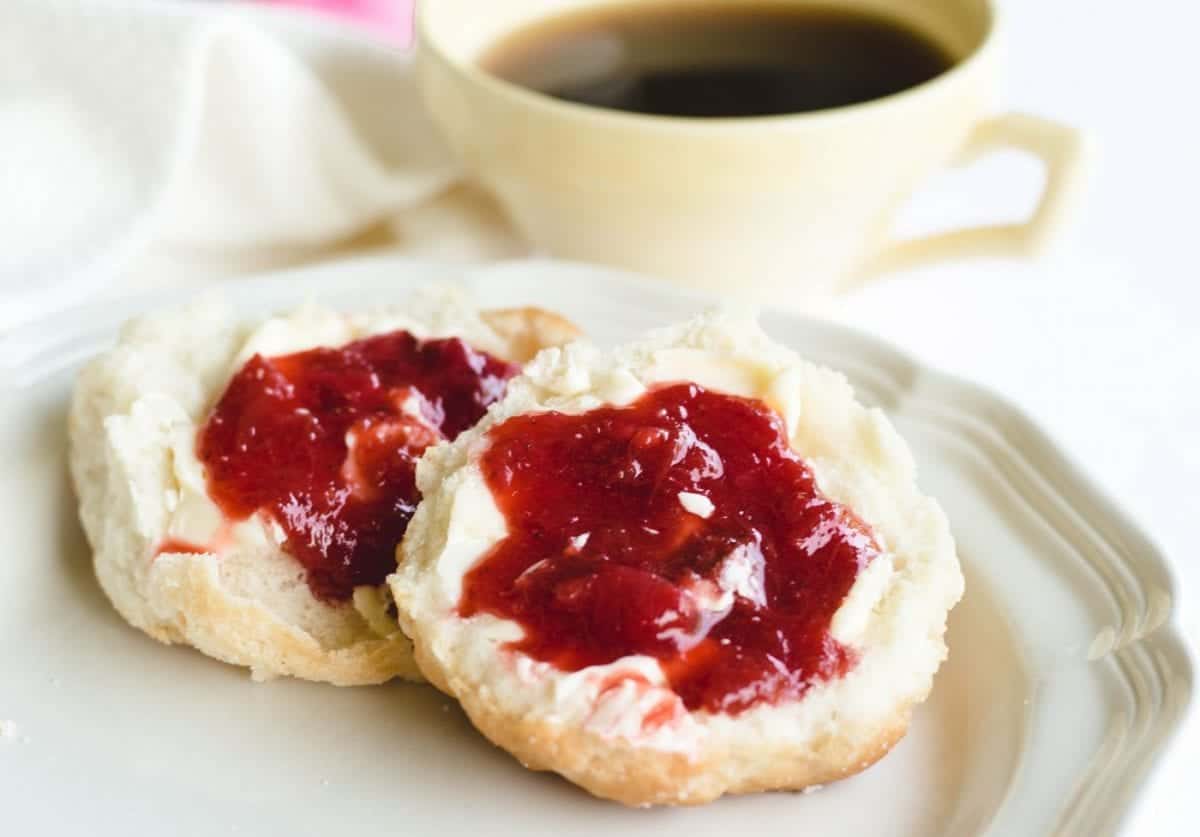
Small Batch Strawberry Rhubarb Jam
Ingredients
Equipment
Recipe Directions
- Prep the jars. Boil the jars and lids for several minutes, then carefully remove them and let them cool. I use small 1/2 pint wide mouth mason jars.
- Let the fruit sit. In a large bowl, combine the chopped rhubarb, strawberries, and sugar. Let it sit for about 45 minutes so the fruit releases its juices.
- Cook low and slow. Transfer the fruit mixture to a medium pan and add the lemon juice. Cook uncovered over low heat until it comes to a slow simmer, about 10 minutes. Lower the heat a little more and keep cooking for about 35 minutes, stirring occasionally so it doesn’t stick. The jam is ready when it reaches 220°F, or when a spoonful chilled on a plate in the freezer for a couple of minutes doesn’t run when you tip the plate.
- Thicken if you like. For a thicker jam, mix the cornstarch with just enough water to make a paste and stir it into the fruit during the last few minutes of cooking.
- Cool and jar. Remove from the heat and let the jam cool before spooning it into the prepared jars. Put the lids on and refrigerate.
Nutrition
Notes
- For smoother jam, puree the berries in a food processor or use an immersion blender before cooking.
- Too sweet? Add a little more lemon juice.
- Too tart? Add a little more sugar.
Your Private Recipe Notes
No pectin? No problem.
Here’s how it works. You’ll mix 2 cups of strawberries (about a 1-pound container) and 3 cups of fresh rhubarb (roughly 8 stalks) with 1 cup of sugar, then let it sit for about 45 minutes while the fruit releases its juices.
There’s no added pectin in this jam. Instead, the acid in the lemon juice teams up with the sugar to help the pectin that’s already in the fruit set up. A little cornstarch near the end gives it extra body if you want a thicker jam.
Rhubarb is low in pectin, which is exactly why it’s so often paired with strawberries. The strawberries bring some to the party.
Fruit first (the jam is only as good as the fruit)
Unripe fruit makes jam that’s just sweet and doesn’t taste like much else, so start with good strawberries and fresh or frozen rhubarb. If you can, shop the farmers market. You can taste before you buy, and that’s hard to beat.
Strawberries: Ripe berries smell like strawberries and are red all over. White or greenish tops mean they were picked underripe. Here’s the trick, though. Since fully ripe strawberries have less natural pectin, you actually want about 25% of your berries to be a little underripe. Mostly red and ripe, with a few not-quite-there berries mixed in.
Rhubarb: Color doesn’t tell you much here. It’s more about the variety than ripeness (see BHG if you’re curious). The rhubarb at my supermarket is usually the red kind with a bit of green tint. Look for firm stalks with no leaves attached, rinse well, and trim about an inch off each end.
Get your jars ready
Even though this jam isn’t headed for the pantry, I like to give the jars and lids a quick “mini sterilization.” I use 1/2 pint (8-ounce) wide mouth mason jars, plus an 8-ounce quilted freezer-safe jar.
Bring a pot of water to a boil, carefully lower in the jars and lids, and boil for a few minutes. Lift them out carefully and let them cool. Stick with jars and lids made for canning, since they’re built to handle the boiling water without cracking. And since this jam is going in the fridge, I swap the band-style lids for a one-piece lid that’s easier to take on and off.
Low and slow wins
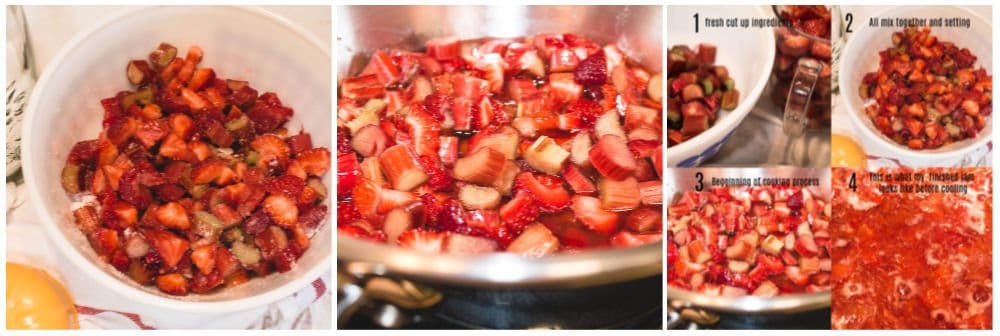
Cook the fruit uncovered over low heat, and resist the urge to stir constantly. I got a better result with less agitation and a long, slow, low cook. It still takes less than an hour from first simmer to done.
How do you know it’s ready? You have two options:
- Thermometer: If you have a candy thermometer, the jam is ready at 220°F.
- Cold plate test: Put a spoonful of jam on a small plate and freeze it for a couple of minutes. Tip the plate. If the jam doesn’t run, you’re done.
Once it’s ready, let it cool before spooning it into your jars. Then slap a lid on and you’re finished.
My recipe card above has the full step-by-step with amounts.
Tips for the best jam
- Want it thicker? Stir the cornstarch into just enough water to make a paste and add it during the last few minutes of cooking.
- Want it smoother? Puree the berries in a food processor or use an immersion blender before they go in the pot.
- Use a heavy-bottomed pot. When I’m making just one jar, I use a small ¾-quart pan.
- Stir occasionally. Not constantly, but enough to keep the bottom from catching and burning.
- Too sweet? Add a bit more lemon juice. Too tart? Add a bit more sugar.
Basically, you toss fruit, sugar, and lemon juice in a pan, cook until it starts to gel, and voilà, you have jam.
How long does homemade jam last?
Let the jam cool, then keep it covered in the refrigerator for up to 3 weeks. It also freezes well, for up to 4 months. When I make a double batch, one jar goes in the fridge and the rest go in the freezer.
I love making batches of jam to give away as food gifts every year. (Just tell your lucky recipient to keep it in the fridge.) For my own pantry, though, one jar at a time is the way to go. No canning hassle.
A note on safe eating: Keep your open jar of jam in the refrigerator until it’s gone, and check it often for signs of spoilage, like mold or yeast growth, or any off smells (“fermented,” “alcohol,” or “yeasty”). If you spot any, toss it right away.
Jam FAQs
How do I clean strawberries before making jam? Put them in a colander and run cool water over them before you hull and slice. Rinse quickly so the berries don’t soak up extra water.
Why is my jam runny? One common reason is very ripe fruit. Ripe strawberries have less pectin, which is why I suggest mixing in a small amount of slightly underripe berries. It can also just need more time, so cook a bit longer and test again with the thermometer or cold plate. Jam also thickens as it cools.
Can I use frozen rhubarb? Yes! Fresh or frozen rhubarb both work.
I’d love to hear how your jam turns out, so leave me a comment and a star rating below!
Nice balance of strawberry and rhubarb flavors and just sweet enough!