
Chicken is one of the most popular things to cook in a slow cooker, but it can be tricky to get that perfectly moist result. Chicken is lean and cooks quickly, so a “set it and forget it” approach can leave you with dry, stringy meat. After plenty of trial and error, here’s what I’ve learned.
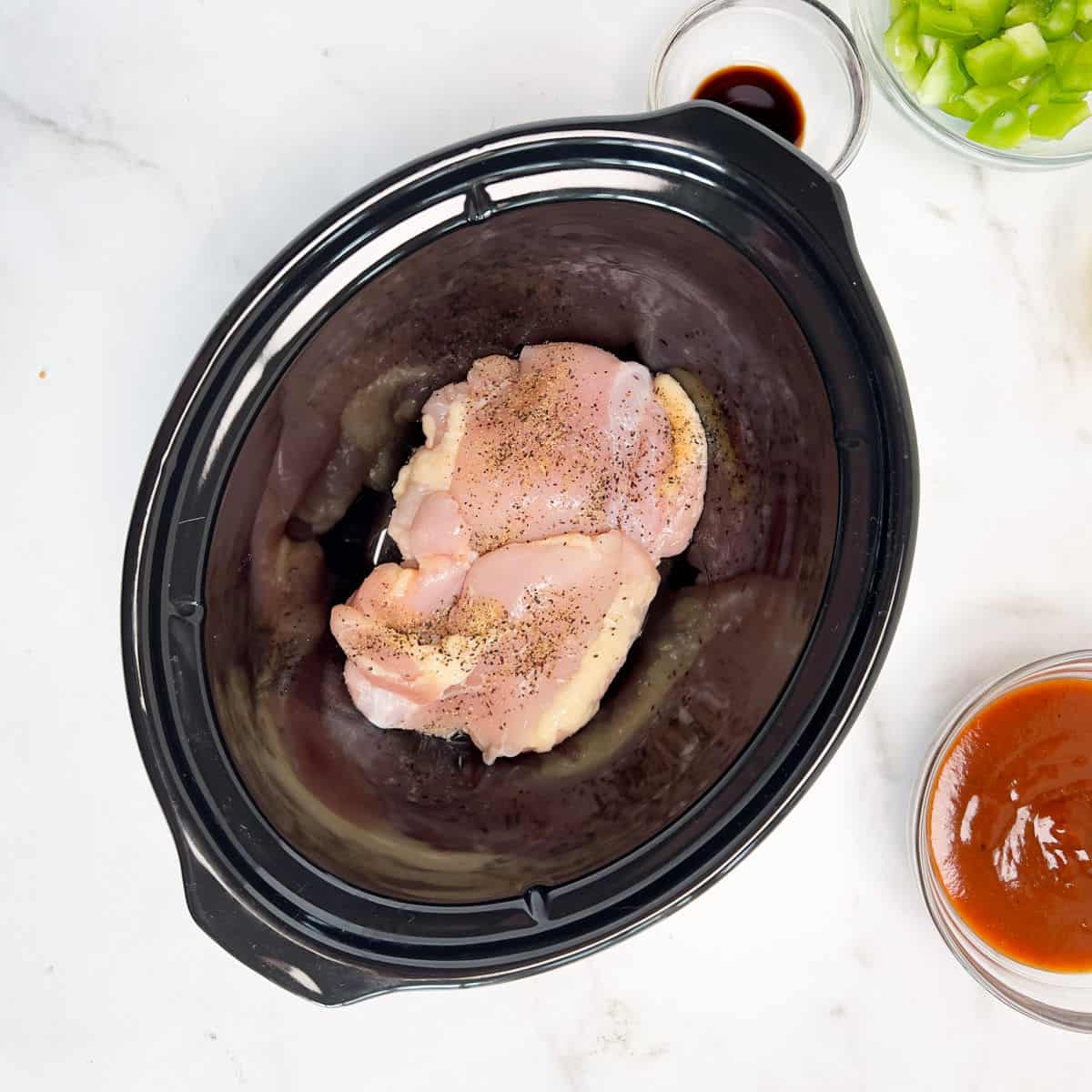
Ready to slow cook some chicken? Check out this wonderful garlic chicken and tasty pineapple chicken.
Do you have a full sized slow cooker recipe you need to scale down, then read about my tips for scaling down a slow cooker recipe.
1. Cook It Low and Slow (Really)
Cook chicken on the Low setting for 4 to 6 hours, depending on the amount and the cut. Smaller portions and boneless breasts will be done toward the early end, while larger amounts and bone-in pieces can go longer.
Cooking on High, or for longer than the recipe calls for, is the most common cause of dry chicken. The meat tightens up and squeezes out its moisture. If you’re unsure, start checking at the 4-hour mark.
Tip: Chicken is safe when it reaches an internal temperature of 165°F (74°C). An instant-read thermometer takes the guesswork out and keeps you from overcooking. Dark meat like thighs is actually more tender at a slightly higher temperature (around 175-185°F), so don’t worry if they go past 165.
2. To Brown or Not to Brown?
Honestly, there’s no hard rule. Browning chicken before it goes into the slow cooker is optional, but I recommend it if you want deeper, richer flavor. Searing creates a caramelized crust that a slow cooker can’t produce on its own, since it cooks with moist, low heat.
If a recipe specifically tells you to brown the chicken, that’s a good sign the step is there for maximum flavor, so it’s worth the extra five minutes. If you’re short on time, skipping it won’t ruin your dinner. It just means a milder flavor and a paler look.
Tip: Pat the chicken dry before searing, and don’t crowd the pan. Dry meat and a hot pan give you the best color.
3. Choose the Right Cut
Chicken thighs are the winner. Meaty thighs have the most flavor, and their higher fat content means they can handle the long cooking time and still come out tender and juicy. They’re also much more forgiving if you cook them a little too long.
Bone-in breasts and bone-in thighs are both excellent for braises. The bones add flavor and help the meat stay moist as it cooks.
Boneless chicken is my go-to for soups. It cooks evenly, is easy to shred right in the pot, and there are no bones to fish out of the broth.
A note on boneless, skinless breasts: They’re the leanest and least forgiving cut. If you’re using them, stick to the shorter end of the cooking time (closer to 4 hours on Low) and consider checking the temperature early.
4. Trim the Fat
It’s worth trimming excess fat from the chicken before it goes in the slow cooker, especially from thighs. Because the lid traps moisture, fat has nowhere to go. It melts into the cooking liquid and can leave your sauce greasy.
If you’re using skin-on pieces, know that the skin will turn soft and rubbery in a slow cooker. Many people remove it before cooking, or brown the skin first and take it off before serving. If you want crispy skin, place the cooked chicken under the broiler for a few minutes at the end.
5. Cooking a Whole Chicken? Go Breast-Side Down
A small whole chicken works well in a slow cooker. Place it breast side down. The juices from the dark meat run down into the breast meat as it cooks, and the liquid that collects at the bottom of the slow cooker helps keep the bird moist too.
For a small bird (about 3 to 4 pounds), expect roughly 6 to 7 hours on Low, and check that the thickest part of the thigh reaches a safe temperature. Let the chicken rest for 10 to 15 minutes before carving.
Tip: Rest the chicken on a bed of sliced onions, carrots, or celery to lift it off the bottom, and you’ll build a flavorful base for gravy at the same time.
A Few More Slow Cooker Chicken Tips
- Thaw first. Don’t put frozen chicken in the slow cooker. It stays in the temperature danger zone too long and cooks unevenly. Thaw it fully in the refrigerator first.
- Don’t add too much liquid. Chicken releases its own juices as it cooks. Usually a half cup or less of broth is plenty, unless you’re making soup.
- Keep the lid on. Every time you lift it, you lose heat and add to the cooking time.
- Don’t overfill. Fill the slow cooker no more than about two-thirds full so the chicken cooks evenly.
- Add delicate ingredients late. Things like fresh herbs, dairy, and quick-cooking vegetables are best stirred in during the last 30 minutes.
- Thicken at the end. If your sauce is thin, stir in a cornstarch slurry (equal parts cornstarch and cold water) near the end and cook on High for 15 minutes.
- Use your leftovers. Shred leftover chicken for tacos, sandwiches, salads, or soup. Store it with some of the cooking juices so it stays moist when reheated.
For juicy slow cooker chicken, remember these basics: cook it low and slow, choose thighs when you can, brown it if you want more flavor, trim the extra fat, and put a whole bird in breast side down. Once you get the timing right for your slow cooker, it’s one of the easiest ways to get dinner on the table.
Slow Cooker Chicken FAQs
Why does my slow cooker chicken taste bland or end up swimming in watery sauce?
Chicken releases a lot of liquid as it cooks, which dilutes the flavor of whatever you started with. To fix it:
- Season generously. Salt the chicken well, and use bold spices, garlic, or a spice rub, since the flavors mellow during the long cook time.
- Use a flavorful liquid. A little broth, salsa, or tomato sauce goes much further than plain water.
- Finish with acid. A squeeze of lemon or lime juice, or a splash of vinegar, stirred in at the end brightens flavors that have flattened out.
- Reduce the sauce. If it’s still thin, pour the juices into a saucepan and simmer for 10 minutes while the chicken rests.
My chicken is still a little pink near the bone. Is it safe to eat?
Reference: https://www.fsis.usda.gov/es/node/3306
Not necessarily unsafe. Pink or reddish color near the bone is common, especially with bone-in thighs and drumsticks, and it can happen even when the meat is fully cooked. The color alone isn’t a reliable test, so go by temperature instead. Insert a thermometer into the thickest part without touching the bone. If it reads 165°F or higher, it’s safe to eat. If it’s below that, put the lid back on and keep cooking, checking every 20 to 30 minutes.