Making quiche for one or two people is a little different from baking a full 9-inch quiche. The custard is the same simple mix of eggs and dairy, but the pan you choose changes everything from baking time to texture to how easy it is to serve.
A standard quiche recipe usually fills a 9-inch pie plate or tart pan. That is perfect for brunch or company, or if intending on freezing the leftovers, but not always practical when you are cooking for one. A smaller pan gives you just enough quiche for one meal, or one meal plus leftovers, without taking up half the refrigerator.
The best pan for a small quiche depends on whether you want a crust, a crustless quiche, a single serving, or a small batch you can slice into two or three portions.
Best Overall Pan for a Small Quiche
For most small batch quiche recipes, a 6-inch pie plate, 5-inch baking dish, or 10-ounce ramekin works best.
These smaller pans are easy to fill, bake more quickly than a full-size quiche, and make the finished quiche feel intentional instead of like a scaled-down version of something larger.
If you are cooking for one, I especially like using a small baking dish or ramekin because you can bake and serve the quiche in the same dish. There is no need to unmold it, slice it perfectly, or fuss with presentation.
Small Quiche Pan Size Guide
| Pan or Dish | Best For | Approximate Egg Amount |
|---|---|---|
| 10-ounce ramekin | Single serving crustless quiche | 1 egg |
| 12-ounce ramekin | Heartier single serving | 1 to 2 eggs |
| 5-inch baking dish | Quiche for one with a little leftover | 2 eggs |
| 6-inch pie plate | Small quiche with crust | 2 eggs |
| 7-inch pie plate | Small batch quiche for two | 2 to 3 eggs |
| Small loaf pan | Crustless quiche slices | 2 to 3 eggs |
| Muffin tin | Mini quiches or freezer portions | 1 egg for 2 to 3 cups |
As a simple starting point, use about ½ cup dairy for every egg. For a single-serving quiche, that usually means 1 egg plus ¼ to ½ cup milk, cream, half-and-half, or a combination.
For a richer custard, use half-and-half or a splash of cream. For a lighter everyday quiche, milk works fine.
Ramekins: Best for Single-Serving Crustless Quiche
Ramekins are one of the easiest choices for quiche for one. They are small, inexpensive, and perfect for a crustless quiche.
A 10-ounce ramekin works well for a light single serving. A 12-ounce ramekin gives you a little more room for vegetables, cheese, or cooked bacon.
Ramekins are best when you want:
- A quick breakfast or lunch
- A crustless quiche
- Easy cleanup
- Built-in portion control
- A dish you can bake and eat from
The only drawback is that ramekins are small, so you need to be careful not to overfill them. Fill the dish no more than about three-quarters full so the custard has room to puff slightly as it bakes.
Small Pie Plates: Best for Quiche With Crust
If you want a traditional quiche with a crust, a 6-inch or 7-inch pie plate is a good choice.
A 6-inch pie plate usually works well with 2 eggs and about 1 cup of dairy. This gives you a small quiche that can serve one very hungry person or two lighter portions.
A 7-inch pie plate gives you a little more room and is a good choice if you want leftovers for lunch the next day.
Small pie plates are best when you want:
- A classic quiche with crust
- A pretty presentation
- A small brunch-style quiche
- Two servings instead of one
Glass pie plates are helpful because you can see whether the bottom crust is browning. Ceramic dishes look nice on the table but may take a little longer to heat. Metal pie pans bake faster and can help the crust brown more quickly.
Small Baking Dishes: Best Everyday Choice
A small baking dish is often the most practical pan for cooking for one. A 5-inch square, 5×7-inch baking dish, or other small oven-safe dish can work well for crustless quiche or a casual quiche with a simple crust pressed into the bottom.
This is my favorite option when the goal is not a perfect slice, but an easy meal.
A small baking dish is best when you want:
- A simple breakfast-for-dinner meal
- A no-fuss crustless quiche
- Room for vegetables and cheese
- Something easy to reheat
- A practical dish for one person
The shape does not need to be perfect. The important thing is that the dish is not too large. If the custard is spread too thin, the quiche can overbake before it has that soft, creamy texture in the center.
Muffin Tins: Best for Mini Quiches
Muffin tins are useful when you want mini quiches for meal prep or freezing. They are not quite the same as a single-serving quiche, but they are handy if you want small portions you can reheat during the week.
A muffin tin works best for:
- Mini crustless quiches
- Freezer-friendly breakfast portions
- Using up small amounts of vegetables, cheese, or ham
- Brunch trays
- Portion-controlled snacks
Because muffin tin quiches are small, they bake quickly. Check them early so they do not become rubbery.
Loaf Pans: Best for Crustless Quiche Slices
A small loaf pan can be a good choice for crustless quiche if you want neat slices. This works especially well for a 2-egg or 3-egg quiche.
The loaf pan shape makes the quiche easy to cut into two or three pieces, which is nice if you want one serving now and one serving later.
Use parchment paper if you want to lift the quiche out of the pan before slicing.
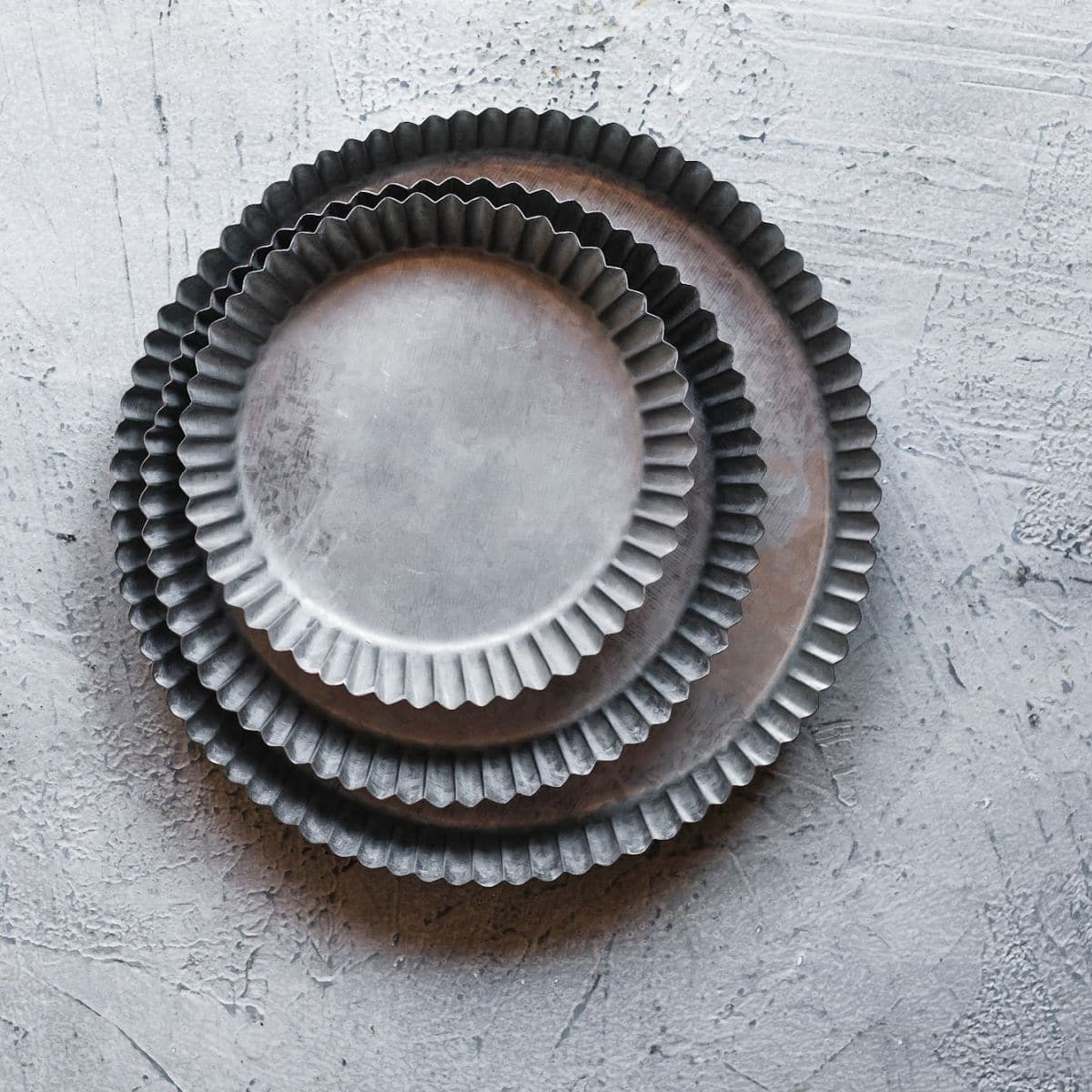
Tart Pans: Pretty, But Not Always Practical for One
A tart pan with a removable bottom makes a beautiful quiche, but it is not always the most practical choice for cooking for one. I use a ceramic tart pan by for my Mediterranean quiche and it works really well and make a nice presentation
Most tart pans are 9 or 10 inches wide, which is too large for a single-serving quiche. Smaller tart pans can work, but they are more specialized and not something every home cook owns.
A tart pan is best if you want a crisp crust and a polished presentation. For everyday cooking, a small pie plate, ramekin, or baking dish is usually easier.
What About a Standard 9-Inch Pie Plate?
A 9-inch pie plate is still the best choice for a full-size quiche, but it is usually too large for cooking for one unless you plan to freeze portions or eat leftovers for several days.
If you only have a 9-inch pie plate, you can still make quiche, but it is better to make a full recipe and portion the leftovers. Trying to bake a very small amount of custard in a large pie plate usually gives you a thin, dry quiche.
For one or two people, a smaller pan gives better results.
How Pan Material Affects Small Quiche
The pan material matters because small quiches bake faster than full-size quiches.
- Metal pans heat quickly and help crust brown faster. They are a good choice for small quiches with crust.
- Glass dishes heat more slowly but let you see the crust as it bakes. They are helpful if you are still learning how to judge doneness.
- Ceramic dishes retain heat well and look nice for serving, but they may need a few extra minutes in the oven.
- Ramekins are usually ceramic and work very well for crustless quiche. Since they hold heat, the quiche may continue to firm up a bit after you take it out of the oven.
How Full Should the Pan Be?
- For any small quiche, fill the pan no more than about three-quarters full.
- Quiche custard needs a little room to puff as it bakes. If the pan is filled too high, the custard can spill over or bake unevenly.
- This matters even more with small pans because there is less room for error.
How to Know When a Small Quiche Is Done
A small quiche is done when the edges are set and the center still has a slight jiggle. It should not look liquid in the middle, but it should not be completely firm either.
The quiche will continue to set as it rests.
For the best texture, let a small quiche rest for 5 to 10 minutes before eating. This gives the custard time to settle and makes it easier to slice or scoop.
My Favorite Pans for Cooking-for-One Quiche
If you are building a small-batch kitchen, you do not need every pan on this list. These are the most useful:
- 10-12 ounce ramekin for single-serving crustless quiche
- 5-inch baking dish for everyday quiche for one
- 6-inch pie plate for small quiche with crust
- Small loaf pan for crustless quiche slices
- Muffin tin for freezer-friendly mini quiches
If you only buy one, choose a small 5 x 5 baking dish or 10-12 ounce ramekin. You can use it for quiche, baked eggs, casseroles, cobblers, bread pudding, and other single-serving meals.
Frequently Asked Questions
What size pan is best for quiche for one?
A 10-ounce ramekin, 12-ounce ramekin, or 5-inch baking dish is best for quiche for one. Use a 6-inch pie plate if you want a small quiche with crust.
Can I make quiche in a ramekin?
Yes. Ramekins are excellent for single-serving crustless quiche. Grease the ramekin lightly, add your fillings, pour in the custard, and bake until the edges are set and the center has a slight jiggle.
What size pan should I use for a 2-egg quiche?
A 5-inch baking dish, 6-inch pie plate, or small loaf pan usually works well for a 2-egg quiche. The exact fit depends on how many vegetables, cheese, or other fillings you add.
Can I use a regular pie plate for a small quiche?
You can, but it is not ideal. A small amount of custard spread across a 9-inch pie plate will bake up thin and may turn dry. A smaller dish gives the quiche better height and texture.
Is crustless quiche better for cooking for one?
Crustless quiche is often easier for cooking for one because you do not need to make or cut down a pie crust. It also works well in ramekins, small baking dishes, and loaf pans.
The best pan for a small quiche is the one that matches how you actually cook. If you want a pretty little quiche with crust, use a 6-inch pie plate. If you want an easy breakfast or dinner for one, use a ramekin or small baking dish. If you want leftovers, use a small loaf pan or 7-inch pie plate.
For everyday cooking for one, keep it simple. A small oven-safe dish, a couple of eggs, a splash of dairy, and whatever cheese or vegetables you have on hand can turn into a satisfying little quiche without making a full-size recipe.